


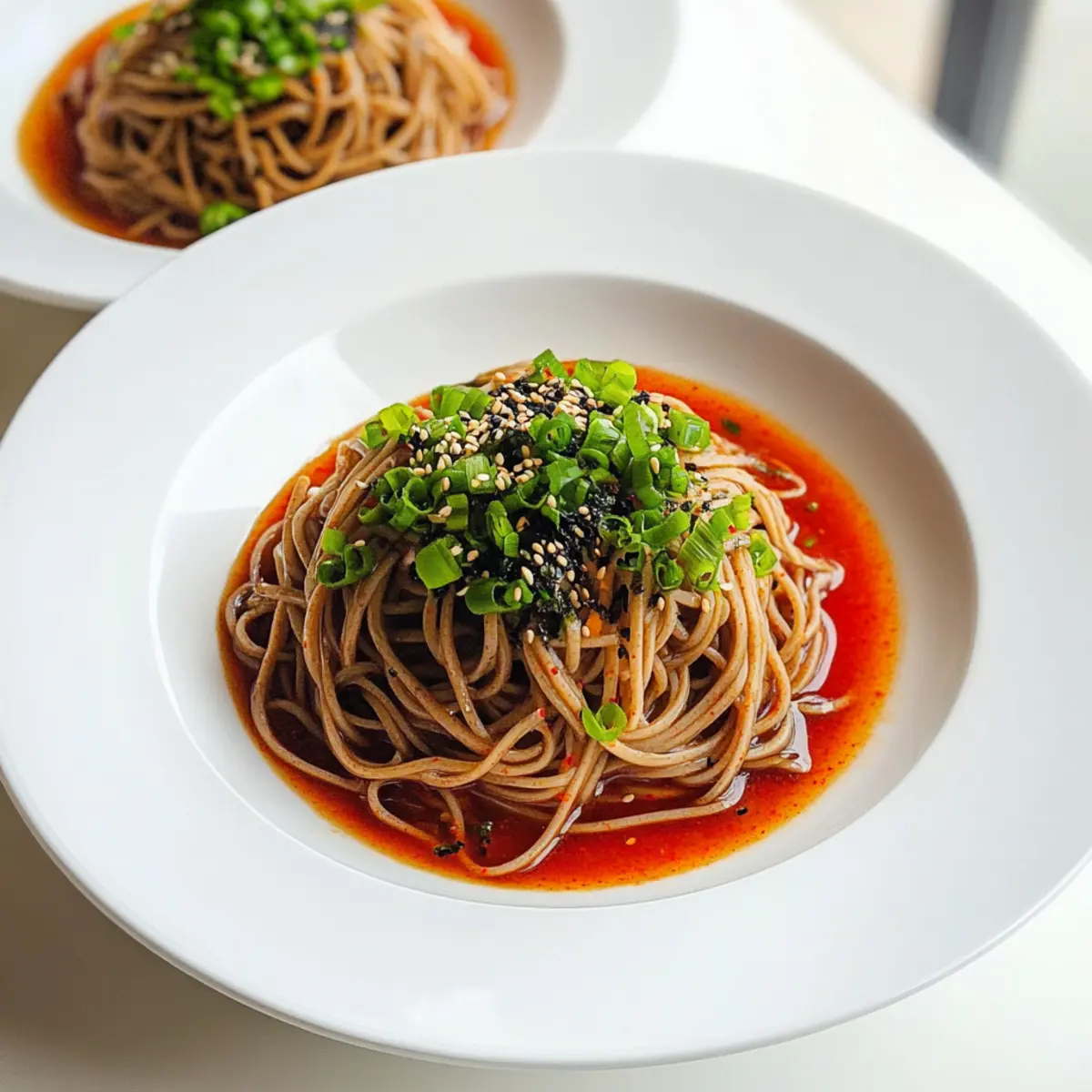
As I twirled the slippery strands of noodles around my chopsticks, a wave of nostalgia washed over me, transporting me straight to the vibrant streets of Korea. These Easy Korean Sesame Noodles (Deulgireum Makguksu) perfectly blend nutty Korean wild sesame oil and savory soy sauce, allowing you to savor a dish that’s both refreshing and satisfying. Ideal for busy weeknights, this quick recipe not only saves you from fast food fatigue but also caters to both classic and spicy cravings! It’s endlessly customizable; feel free to toss in your favorite veggies or proteins to make it your own. Ready to impress your taste buds and your dinner guests? Let’s dive into this delicious and easy-to-make noodle dish that will elevate your homemade dinners to a whole new level!
Why Are Korean Sesame Noodles So Great?
Quick and Easy: This recipe is designed for busy nights, with minimal cooking time and effort. Customizable Flavors: Choose between classic and spicy variations to satisfy any palate. Nutty Delight: The fusion of Korean wild sesame oil and soy sauce offers a rich flavor that your taste buds will love. Fresh Ingredients: Add colorful vegetables or proteins for a nutritious, vibrant meal. Plus, you won’t miss out on flavor or satisfaction, making it a perfect alternative to fast food! Pair with a side of kimchi for an authentic experience, or add your twist by exploring other recipes like Korean Fried Chicken for a complete feast.
Korean Sesame Noodle Ingredients
For the Noodles
• Soba Noodles – Main component providing the base of texture; use high-quality soba noodles for the best taste.
For the Sauce
• Tsuyu (soup seasoning sauce) – Adds umami flavor to the dish; can be substituted with soy sauce for a gluten-free option.
• Korean Wild Sesame Oil (Deul-gireum) – Provides a rich, nutty flavor; can be replaced with good-quality toasted sesame oil if unavailable.
• Chili Oil – Adds heat for the spicy variation; use Lao Gan Ma for intense flavor.
For the Garnish
• Green Onion or Chives – Adds freshness and color; can substitute with scallions.
• Toasted Sesame Seeds – Enhances nuttiness and provides texture; ground seeds work for better flavor integration.
• Toasted Seaweed (Optional) – For added umami and texture; can be skipped if not available.
• Red Chili (Optional) – For garnish and added heat; customizable based on spice preference.
Step‑by‑Step Instructions for Korean Sesame Noodles
Step 1: Cook the Noodles
Begin by bringing a large pot of water to a rolling boil. Add high-quality soba noodles and cook according to package instructions, typically about 6 minutes, until they are tender but still firm to the bite. Stir occasionally to prevent sticking and once done, drain the noodles in a colander.
Step 2: Rinse the Noodles
After draining the noodles, quickly rinse them under cold running water. This step stops the cooking process and prevents the noodles from becoming mushy. Ensure they are well-drained afterwards to avoid diluting your sauce when you mix the noodles with it.
Step 3: Prepare the Sauce
In a medium-sized bowl, combine tsuyu or soy sauce with Korean wild sesame oil or chili oil, depending on your preference for spice. Whisk the sauce together until well-blended, allowing the rich nutty aroma of the sesame oil to fill the air. This flavorful sauce is crucial for your Korean Sesame Noodles.
Step 4: Combine Noodles and Sauce
In a large mixing bowl, add the rinsed soba noodles to the prepared sauce. Toss gently but thoroughly using a pair of chopsticks or tongs, ensuring each strand of noodle is evenly coated with the rich sauce mixture. This step is key to infusing every bite with flavor.
Step 5: Add Garnishes
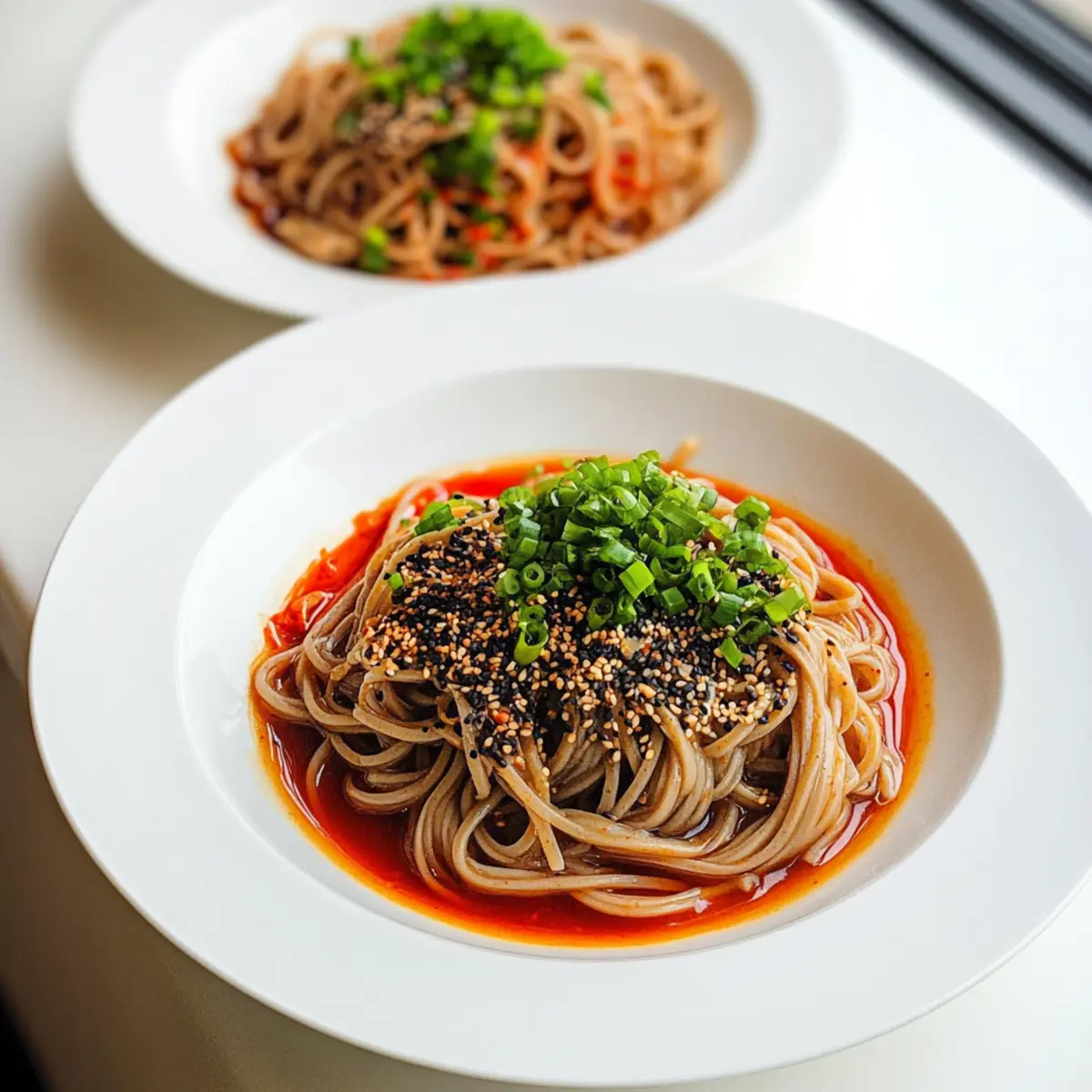
To enhance your Korean Sesame Noodles, sprinkle chopped green onions or chives over the top, followed by toasted sesame seeds for a delightful crunch. For those who enjoy extra spice, feel free to add thinly sliced red chili or crushed toasted seaweed for added umami and texture.
Step 6: Serve and Enjoy
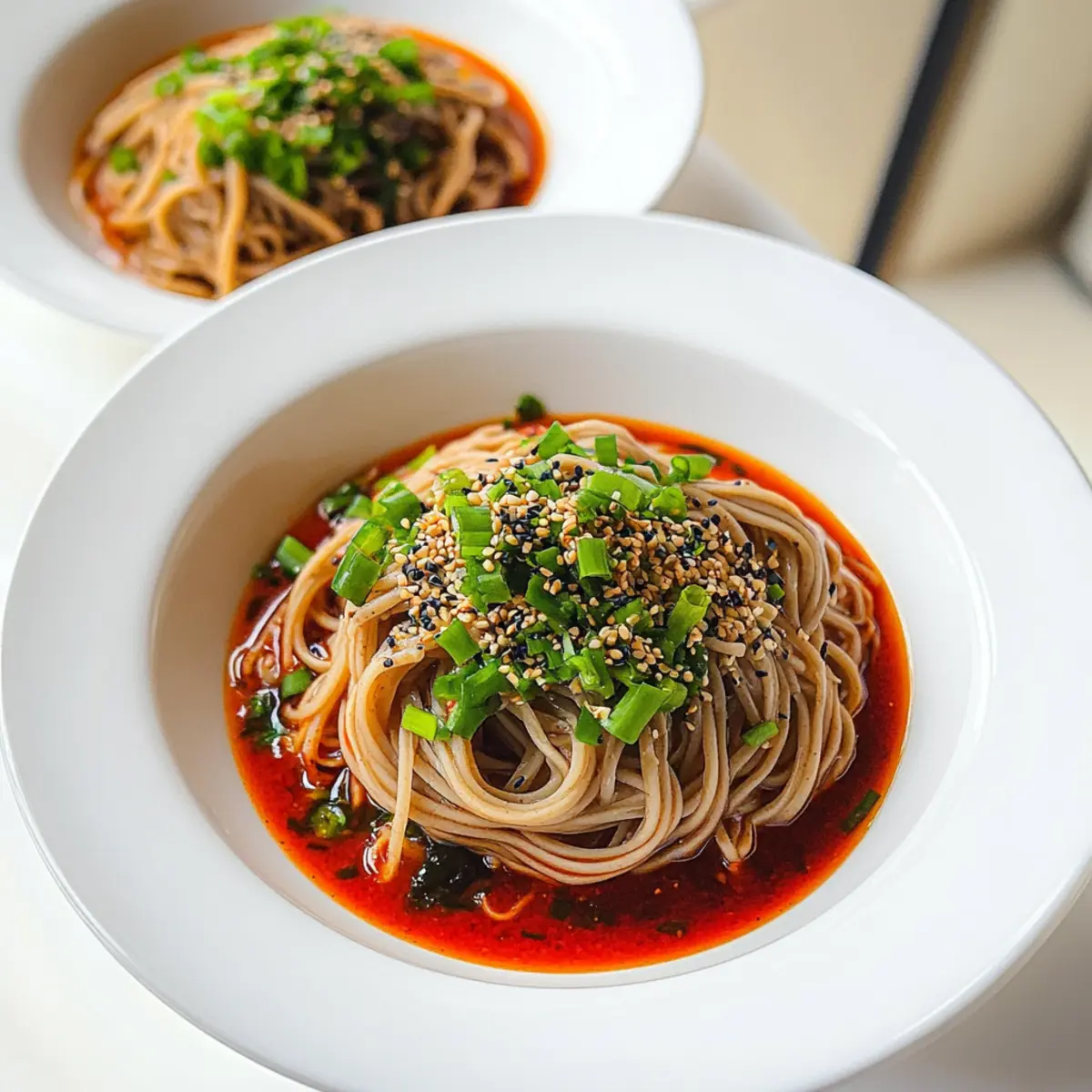
Serve your vibrant Korean Sesame Noodles chilled as a refreshing meal or side dish. The rich, nutty flavors combined with the fresh garnishes create a visual feast. Perfect for weeknight dinners, this dish impresses with its ease and satisfying taste while keeping fast food alternatives at bay.
Storage Tips for Korean Sesame Noodles
Fridge: Store leftovers in an airtight container for up to 2 days. These Korean Sesame Noodles are best enjoyed fresh, but they can still be tasty when refrigerated.
Freezer: Though not ideal for freezing due to texture changes, you can freeze the sauce separately in a freezer-safe container for up to 1 month. When ready, thaw and mix with fresh noodles.
Reheating: If you need to enjoy leftover noodles, reheat gently in a pan over low heat, adding a splash of water or extra oil to loosen them up without cooking them further.
Room Temperature: Avoid leaving cooked Korean Sesame Noodles out at room temperature for more than 2 hours to ensure crispy garnishes and flavors remain intact.
What to Serve with Easy Korean Sesame Noodles
Indulge in a delightful meal experience by pairing these silky strands of noodles with a variety of delicious sides that complement their flavors.
- Kimchi: The classic Korean side dish adds a spicy, tangy kick, enhancing the nutty flavors of the noodles.
- Cucumber Salad: A refreshing, crunchy accompaniment that balances the richness of the sesame oil, bringing a crisp texture to each bite.
- Grilled Chicken: Tender, juicy chicken seasoned lightly allows the noodles’ flavors to shine while providing hearty protein.
- Steamed Edamame: These young soybeans offer a protein-packed, buttery mouthful that pairs beautifully with the noodles’ cold presentation.
- Spicy Pickled Radish: Add a zingy crunch that brightens each mouthful, contrasting perfectly with the smoothness of the noodles.
- Sesame Seaweed Salad: This dish echoes the flavors in the noodles, adding a distinct umami taste with its satisfying textures.
- Cold Soba Salad: For a noodle match, this salad provides another layer of flavor, often with a citrusy dressing that complements the sesame notes.
- Chilled White Wine: A glass of chilled wine refreshes the palate, enhancing the overall dining experience with each sip.
- Mango Sorbet: End the meal on a sweet note with a light, fruity sorbet that cleanses the palate after savory bites.
Korean Sesame Noodles Variations & Substitutions
Feel free to play around with these suggestions, making this dish truly your own!
-
Protein Boost: Add grilled chicken, shrimp, or crispy tofu for a heartier meal that delights the senses and fills you up.
-
Vegetable Medley: Toss in julienned carrots, bell peppers, or crunchy cucumbers to give your noodles a refreshing, colorful twist.
-
Gluten-Free: Substitute soba noodles with rice noodles or spiralized zucchini for a light and gluten-free option that still satisfies.
-
Dairy-Free: All ingredients are naturally dairy-free, but ensure that your sauces are free from any hidden dairy for a smooth experience.
-
Extra Heat: Crank up the spice with additional chili oil, crushed red chili flakes, or even a sprinkle of gochugaru for that authentic Korean kick!
-
Savory Upgrade: Try adding a spoonful of miso paste to the sauce for a deeper umami flavor that enhances the overall richness.
-
Sweet Hint: Drizzle a little honey or maple syrup into the sauce for a slight sweetness that perfectly counters the savory notes.
-
Noodle Variations: Experiment with other noodles like udon or even soba noodles made from buckwheat for a nutritious twist. Each one offers a unique texture worth exploring!
With these variations, your Korean Sesame Noodles can shine in new, exciting ways! And while you’re at it, consider pairing this dish with some delightful sides, like Korean Ground Beef or Sticky Beef Noodles to make your dining experience unforgettable.
Make Ahead Options
These Easy Korean Sesame Noodles are a fantastic choice for meal prep, saving you valuable time during busy weeknights! You can prepare the soba noodles up to 24 hours in advance; simply cook them, rinse under cold water, and drain well before storing in an airtight container in the refrigerator. The sauce can also be mixed ahead of time (up to 3 days) and kept in the fridge to maintain its rich flavor. When you’re ready to enjoy your Korean Sesame Noodles, just toss the chilled noodles with the prepared sauce, add fresh garnishes, and serve. This way, you can indulge in a delicious homemade meal with minimal effort!
Expert Tips for Korean Sesame Noodles
- Drain Well: Ensure your soba noodles are thoroughly drained after rinsing; excess water can dilute the flavorful sauce.
- Adjust Spice: Start with a small amount of chili oil and gradually add more to suit your heat preference for Korean sesame noodles.
- Quality Noodles: Always opt for high-quality soba noodles; cheaper brands may affect the texture and taste of your dish.
- Garnish Wisely: Don’t skip the garnishes! They add freshness and crunch that enhance the overall flavor profile of your noodles.
- Quick Serve: For a last-minute meal, prepare your sauce in advance and store it in the fridge; mix with fresh noodles when ready to eat.
Korean Sesame Noodles Recipe FAQs
How do I select the best soba noodles for this recipe?
Absolutely! Look for high-quality soba noodles that are 100% buckwheat for the best flavor and texture. They should be firm and have a slightly earthy aroma. Avoid varieties with added wheat unless you have a gluten-free preference, as they may alter the traditional flavor of your Korean Sesame Noodles.
How should I store leftover Korean Sesame Noodles?
After enjoying your meal, place any leftovers in an airtight container and refrigerate them for up to 2 days. To maintain the best taste and texture, it’s best to store the noodles and sauce separately if possible. When you’re ready to enjoy them again, just reheat gently in a pan with a splash of water or oil.
Can I freeze Korean Sesame Noodles?
While fresh noodles are highly recommended for this dish, you can freeze the sauce separately in a freezer-safe container for up to 1 month. To do this, cool down the sauce, pour it into the container, and label with the date. When you’re ready to use it, thaw it overnight in the fridge and mix it with freshly cooked soba noodles for a delightful meal.
What can I do if my noodles clump together after cooking?
Very! If you find your noodles clumping, it’s usually due to not rinsing them thoroughly after cooking. To remedy this, a quick rinse under cold water not only cools them down but also separates the noodles. If they still seem sticky, a drizzle of sesame oil can help loosen them up while adding extra flavor.
Are Korean Sesame Noodles safe for my dietary needs?
Yes! This dish is vegetarian and can be made vegan simply by ensuring you use a plant-based tsuyu or soy sauce. It’s a fantastic option for those avoiding meat; however, check individual ingredient labels, especially for sauces, to ensure they fit your dietary restrictions. Always stay mindful of any allergies to sesame products, especially if you’re serving it to guests!
Is it okay to use pre-cooked noodles for Korean Sesame Noodles?
Certainly! If you’re pressed for time, you can use pre-cooked or instant soba noodles. Just be sure to follow the reheating instructions on the package and mix them quickly with the sauce to maintain that delightful flavor. They won’t have quite the same texture as boiled noodles, but they will save you time and effort!
Korean Sesame Noodles That Wow: Quick & Easy Variations
Ingredients
Equipment
Method
- Begin by bringing a large pot of water to a rolling boil. Add high-quality soba noodles and cook according to package instructions, typically about 6 minutes, until they are tender but still firm. Stir occasionally to prevent sticking and once done, drain the noodles.
- After draining, quickly rinse the noodles under cold running water to stop the cooking process. Ensure they are well-drained afterwards.
- In a medium-sized bowl, combine tsuyu or soy sauce with Korean wild sesame oil or chili oil, depending on your preference. Whisk until well-blended.
- In a large mixing bowl, add the rinsed soba noodles to the prepared sauce and toss gently but thoroughly to coat all strands of noodle.
- Sprinkle chopped green onions or chives over the top, followed by toasted sesame seeds. For extra spice, add thinly sliced red chili or crushed toasted seaweed.
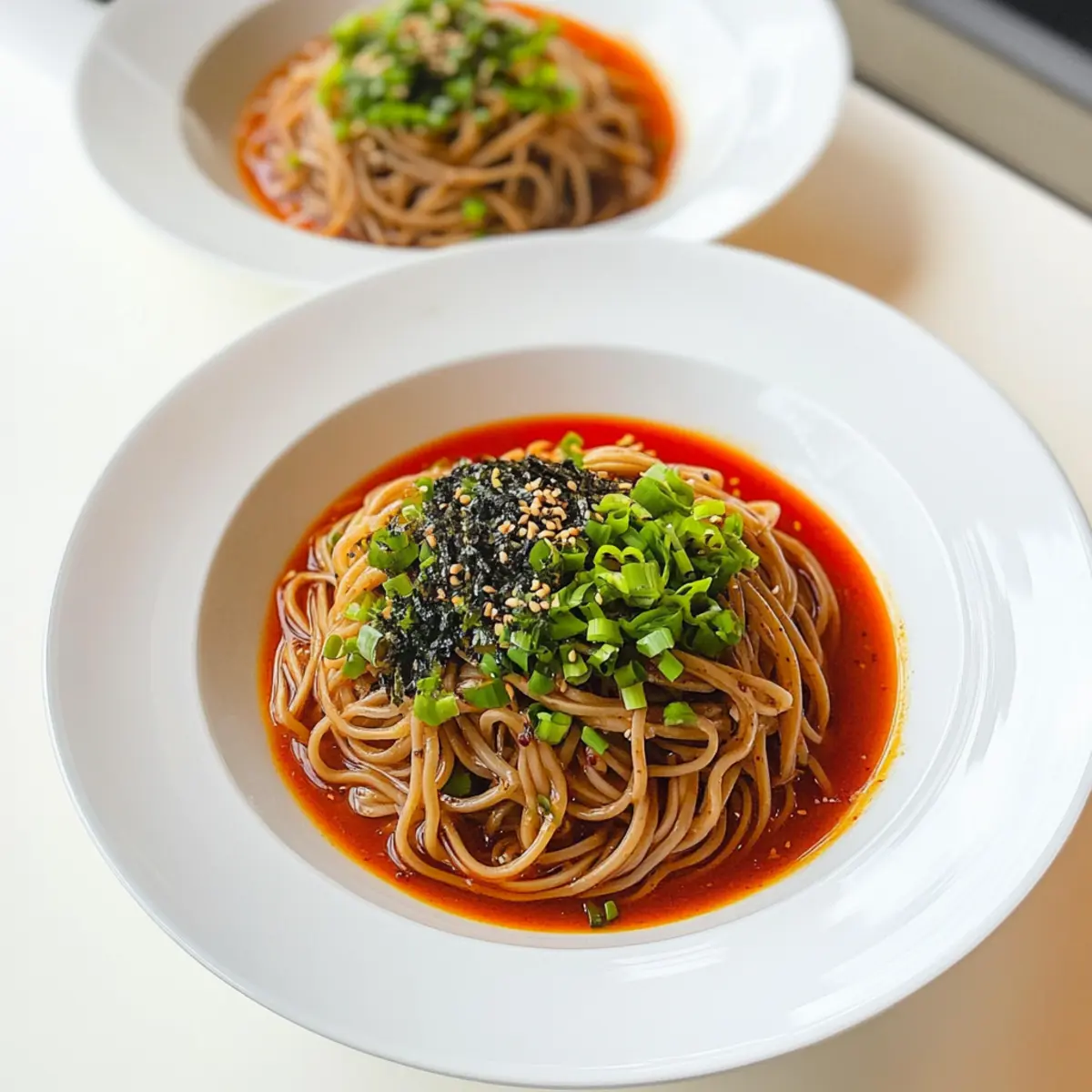
- Serve your Korean Sesame Noodles chilled as a refreshing meal or side dish.