


Stepping into a charming Parisian café, I was captivated by the simplicity and sophistication of a dish that has since become a breakfast staple in my home: French Baked Eggs, or oeufs cocotte. This delightful recipe combines rich, creamy eggs with customizable ingredients, making it a versatile and crowd-pleasing option for any brunch gathering. With minimal prep time and the flexibility to use whatever cheese or herbs you have on hand, these baked eggs are perfect for anyone looking to elevate their morning routine without the fuss. Plus, they’re naturally gluten-free and packed with protein, ensuring you start your day off right. Curious about how to recreate this café favorite in your own kitchen? Let’s dive into the delicious world of oeufs cocotte!
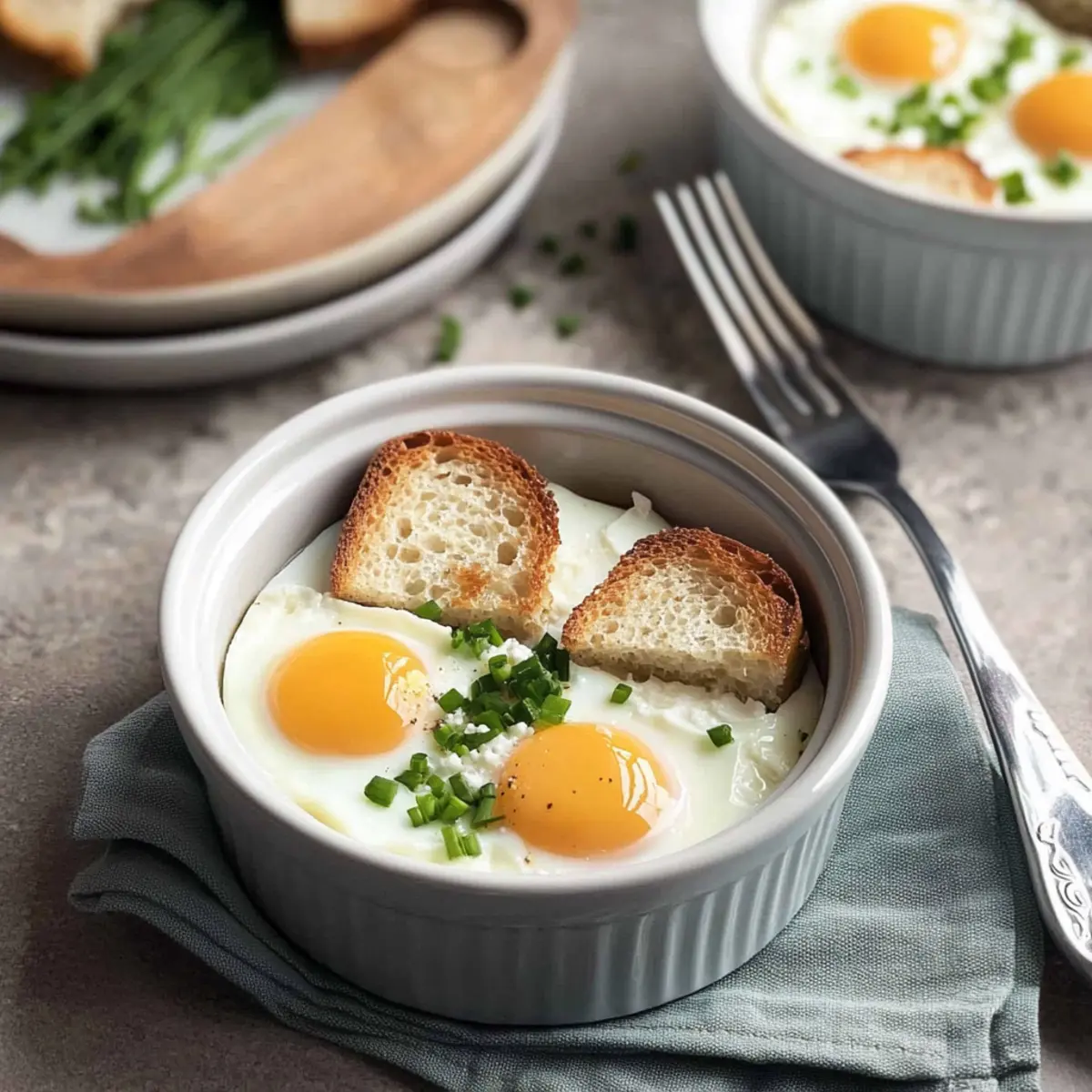
Why is this recipe a must-try?
Simplicity, with just a few ingredients and straightforward steps, you can whip up a gourmet breakfast in no time. Customizable to fit your taste; feel free to swap cheeses or toss in your favorite vegetables for a personalized touch. Crowd-pleasing and elegant, these French Baked Eggs are perfect for brunch with friends or a special family gathering. Nourishing, packed with protein, making them a healthy start to your day. Don’t forget to pair with artisan bread or check out our guide on gluten-free options to make it even better!
French Baked Eggs Ingredients
For the Base
- Butter – Adds richness and prevents sticking; substitute with olive oil for a dairy-free option.
- Crème Fraîche or Cream – Provides creaminess and depth of flavor; substitute with heavy cream or full-fat yogurt.
- Eggs – The main ingredient providing protein and structure; fresh eggs yield the best results.
For the Cheese
- Fresh Goat Cheese – Adds a tangy flavor and creamy texture; substitute with feta or mozzarella for different tastes.
For the Herbs
- Chives and Parsley – Contribute freshness and color; other herbs like thyme or dill can be used based on preference.
Seasoning
- Salt and Pepper – For seasoning to taste; adjust according to your preference.
These delightful French Baked Eggs are not only a treat for the taste buds, but they’re also easily customizable to fit your dietary needs or preferences!
Step‑by‑Step Instructions for French Baked Eggs: Simple & Customizable Oeufs Cocotte
Step 1: Preheat the Oven
Begin by preheating your oven to 350°F (175°C). While the oven heats up, fill a kettle with water and bring it to a boil. This hot water will be essential for the water bath, ensuring your French Baked Eggs cook evenly and delicately, preventing them from becoming rubbery as they bake.
Step 2: Prepare Ramekins
Carefully coat four ramekin cups—each holding about 4-5 ounces—with softened butter. Use your fingers or a pastry brush to spread the butter evenly along the sides and bottom. This will not only enhance the flavor but also ensure that your oeufs cocotte easily slip out once baked.
Step 3: Add Cream Base
Divide the crème fraîche or cream evenly among the prepared ramekins, pouring about 2 tablespoons into each. The cream will create a luxurious base for your French Baked Eggs, adding richness and a creamy texture. Make sure the cream sits evenly at the bottom to enhance the final dish.
Step 4: Crack Eggs
Gently crack one large egg into each ramekin, being careful not to break the yolk. Position the eggs right on top of the cream base. The beauty of this step lies in maintaining the integrity of the yolk, which should perfectly run once the baked eggs are ready to serve.
Step 5: Season Eggs
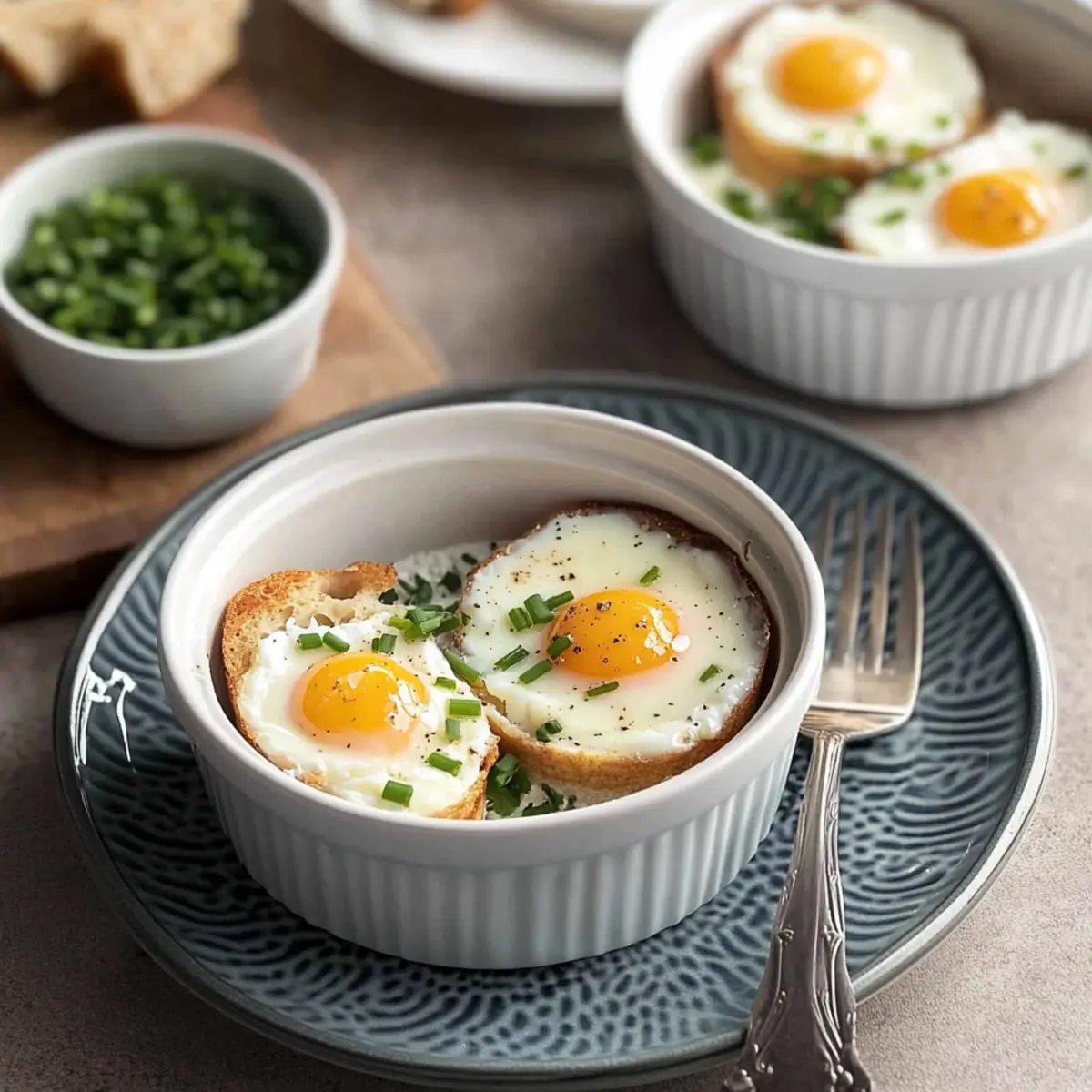
Sprinkle crumbled goat cheese over the eggs, followed by a generous dash of chopped chives, parsley, salt, and pepper to taste. The combination of cheese and herbs infuses the dish with flavor, enhancing the overall taste of your French Baked Eggs while adding vibrant color.
Step 6: Create Water Bath
In a baking dish, carefully place the ramekins and pour the boiling water around them until it reaches halfway up the sides. This water bath (bain marie) helps to cook the eggs gently and evenly, ensuring a beautiful custard-like texture that’s hallmark to delicious oeufs cocotte.
Step 7: Bake
Slide the baking dish into the preheated oven and bake for 14-16 minutes for a runny yolk, or 16-18 minutes for a softer yolk. Begin checking for doneness around the 14-minute mark; the egg whites should be set while the yolk remains delicately soft, creating that ideal creamy experience.
Step 8: Serve
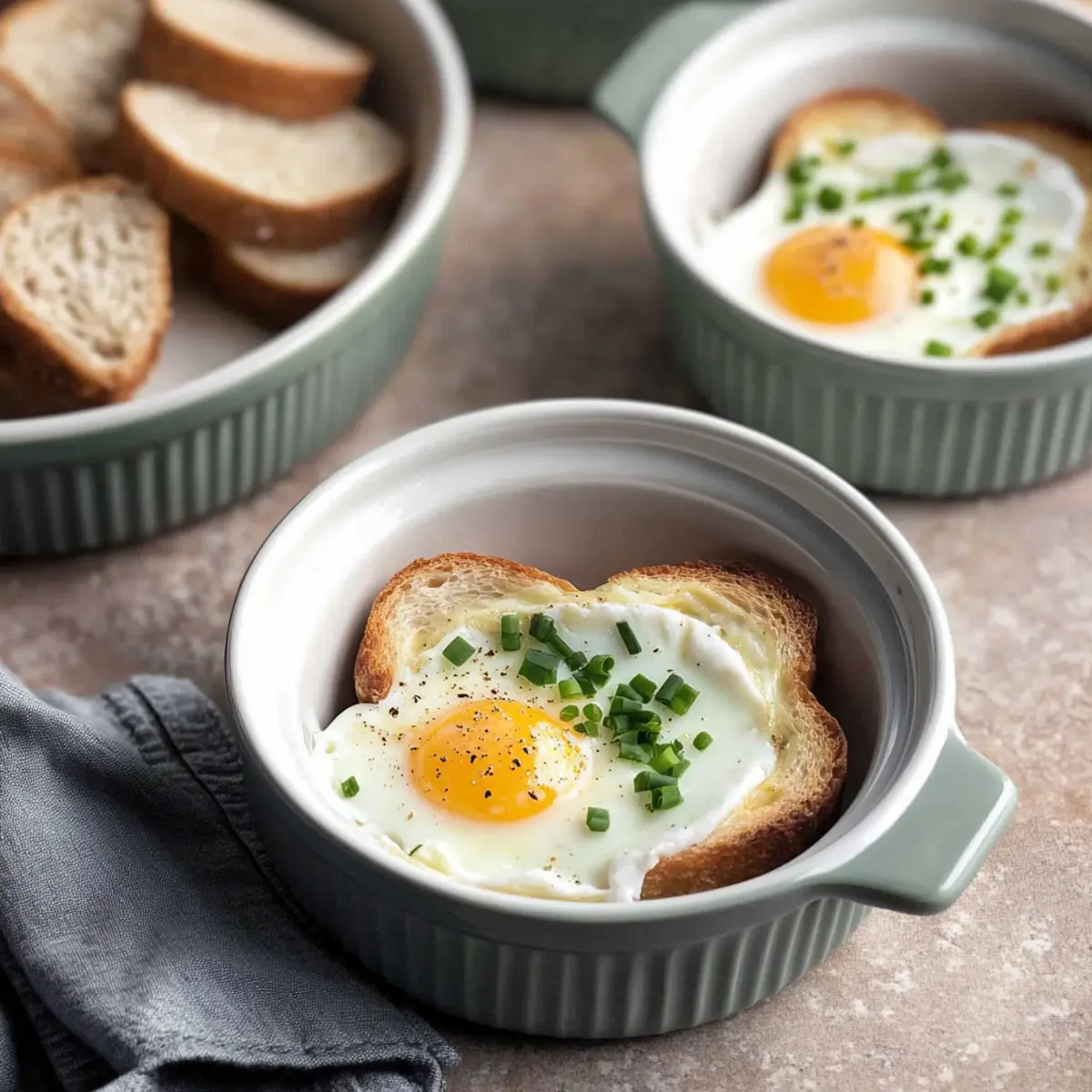
Once baked to your liking, carefully remove the ramekins from the oven, using tongs or heatproof gloves. Serve your French Baked Eggs immediately while they’re still warm, pairing them with toasted bread or batons for a delightful dipping experience that complements their rich flavor.
Make Ahead Options
These French Baked Eggs are perfect for meal prep enthusiasts looking to save time during busy mornings! You can prepare the ramekins with the cream base, crumbled goat cheese, and herbs up to 24 hours in advance. Simply cover the prepared ramekins tightly with plastic wrap and refrigerate them. When you’re ready to serve, crack the eggs into the ramekins, season them, and bake in a water bath as directed for 14-18 minutes, depending on your desired yolk texture. This method ensures that your French Baked Eggs are just as delicious and creamy, providing you with a delightful brunch option with minimal effort!
What to Serve with French Baked Eggs
Elevate your brunch experience by exploring delightful pairings that complement the creamy richness of baked eggs, ensuring a well-rounded meal.
-
Toasted Baguette: The perfect vessel for scooping up the luscious baked eggs and soaking up every drop of creamy goodness.
-
Seasoned Sautéed Spinach: Leafy greens bring a fresh, vibrant contrast while adding depth and nutrition to your brunch table.
-
Crispy Bacon: For those who enjoy a bit of crunch, the savory richness of bacon pairs beautifully with the soft texture of the eggs.
-
Roasted Tomatoes: Juicy and slightly caramelized, roasted tomatoes introduce a burst of natural sweetness and acidity, enhancing every bite.
-
Mixed Greens Salad: A light salad with a tangy vinaigrette adds brightness and balances the dish’s richness, making it feel more complete.
-
Herbed Quinoa: This nutty grain offers a delightful texture and can be seasoned with herbs to tie in the flavors of the baked eggs.
-
Fresh Fruit Platter: Sweet, seasonal fruits provide a refreshing, palate-cleansing finish, enhancing the overall dining experience with pops of color.
-
Sparkling Water with Lemon: Refreshing and light, this drink cleanses the palate while ensuring that your meal remains elevated and sophisticated.
French Baked Eggs Variations & Substitutions
Explore the world of customization with these delightful twists that will elevate your French Baked Eggs!
-
Vegetable Additions: Stir in sautéed spinach, mushrooms, or asparagus to create a heartier dish, adding both color and nutrition.
-
Cheese Choices: Swap goat cheese for feta, mozzarella, or even a sharp cheddar for a new flavor profile; each cheese brings a unique character.
-
Herb Swaps: Experiment with dill, thyme, or fresh basil instead of chives and parsley for a fragrant twist that brightens every bite.
-
Heat Level: For a spicy kick, sprinkle in some red pepper flakes or diced jalapeños before baking; it’s an exciting way to awaken your taste buds!
-
Protein Boost: Add cooked and crumbled bacon or sausage for a savory touch, making these eggs even more satisfying and delicious.
-
Creme Fraiche Alternatives: Consider using sour cream or a plant-based yogurt for a different tang and texture while keeping it creamy.
-
Crusty Base: Instead of using just butter, try a layer of crusty breadcrumbs or gluten-free breadcrumbs at the bottom of the ramekin for added texture.
-
Sweet Touch: For a breakfast dessert vibe, sprinkle in some caramelized apples or pears, transforming your savory dish into a unique sweet-treat experience.
These variations can create a new adventure in every bite. And remember, if you’re looking to tweak your gluten intake, there’s always our guide on gluten-free options to explore. Enjoy experimenting!
Storage Tips for French Baked Eggs
Fridge: Store leftover French Baked Eggs in an airtight container for up to 1 day. Reheat gently in the oven to preserve the creamy texture.
Freezer: For best results, do not freeze cooked oeufs cocotte, as the egg may become rubbery upon thawing. Instead, prepare fresh when ready to enjoy.
Airtight Guidance: If you must store, wrap the ramekins tightly with plastic wrap before placing them in the fridge to retain moisture and flavor.
Reheating: When reheating, cover with foil to prevent over-browning, and warm in a 350°F (175°C) oven for about 10-15 minutes until heated through.
Expert Tips for French Baked Eggs
-
Use Fresh Eggs: Always opt for fresh eggs to achieve the best texture and flavor in your oeufs cocotte; they yield creamier results.
-
Mind the Water Bath: Ensure your ramekins are properly situated in the water bath, as this technique promotes even cooking and prevents rubbery eggs.
-
Check for Doneness: To avoid overbaking, jiggle the ramekins gently; the egg whites should be set while the yolks remain creamy for perfect French Baked Eggs.
-
Experiment with Flavors: Don’t hesitate to mix and match with different cheeses or herbs, making your baked eggs truly customizable to suit your taste.
-
Monitor Time Closely: Keep an eye on baking time; adjust as necessary to reach your preferred yolk consistency—shorter for runny and longer for creamy textures.
French Baked Eggs Recipe FAQs
What type of eggs should I use for French Baked Eggs?
Absolutely! Always opt for fresh eggs when making your oeufs cocotte. Fresh eggs yield a creamier and fluffier result, enhancing the overall texture and flavor of the dish. If possible, use organic or free-range eggs for additional richness.
How should I store leftover French Baked Eggs?
After enjoying your delicious French Baked Eggs, you can store any leftovers in an airtight container in the fridge for up to 1 day. To maintain the creamy texture when reheating, gently warm them in a 350°F (175°C) oven for about 10-15 minutes, covering them with foil to prevent over-browning.
Can I freeze French Baked Eggs?
Very! I wouldn’t recommend freezing cooked oeufs cocotte as the eggs may become rubbery once thawed. Instead, prepare the ingredients ahead of time by assembling them without baking, then freeze them as a raw mixture. When ready to enjoy, simply bake them fresh!
How can I modify this recipe for dietary restrictions?
The glorious part about French Baked Eggs is their adaptability! For a gluten-free option, make sure to pair with gluten-free bread. You can also use dairy-free alternatives by substituting crème fraîche with coconut milk or silken tofu and choosing vegan cheese. Always check labels for allergens!
What should I do if the egg whites overcook?
If you find the egg whites have overcooked, don’t fret! Next time, try reducing the baking time slightly. Aim to check for doneness at around 14 minutes; gently jiggle the ramekins to see if the whites are just set, while the yolks remain beautifully creamy.
How do I know when the French Baked Eggs are done?
Check for doneness by giving the ramekins a gentle jiggle. The egg whites should be set, but the yolks should still wiggle slightly. If you’re aiming for a runny yolk, 14-16 minutes should suffice, while 16-18 minutes will give you a soft set yolk. Adjusting your baking time is key to achieving your perfect consistency!
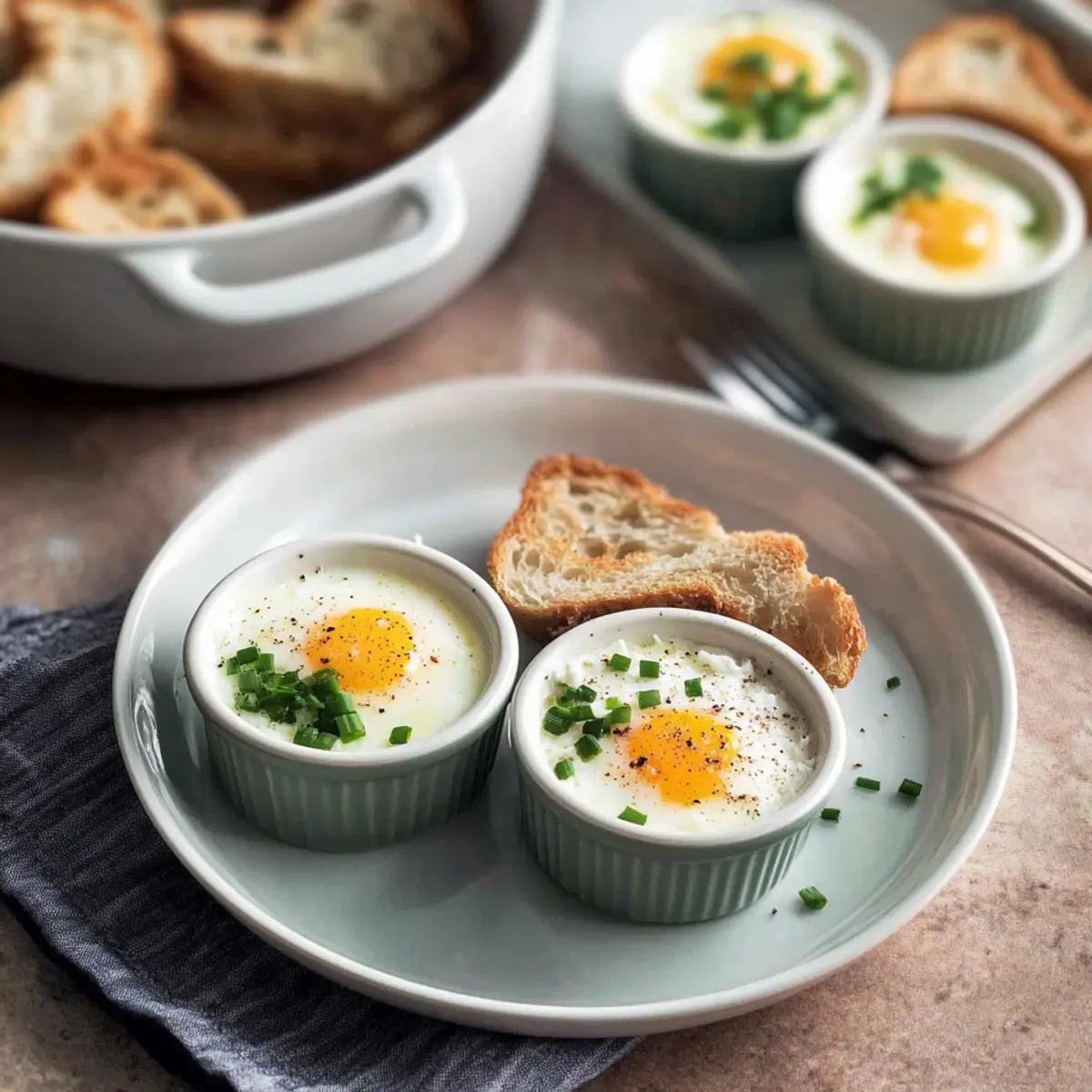
French Baked Eggs: Creamy Oeufs Cocotte Perfect for Brunch
Ingredients
Equipment
Method
- Preheat your oven to 350°F (175°C) and boil water for the water bath.
- Coat four ramekins with softened butter to prevent sticking.
- Divide the crème fraîche or cream evenly among the ramekins.
- Crack one egg into each ramekin on top of the cream.
- Sprinkle goat cheese, chives, parsley, salt, and pepper over the eggs.
- Place the ramekins in a baking dish and pour boiling water around them.
- Bake for 14-16 minutes for runny yolk, checking for doneness.
- Remove from oven and serve immediately with toasted bread.