


As the fragrant spices danced in the air, I couldn’t help but feel transported to a bustling Indian market, where aroma and flavor collide in a vibrant tapestry. This Velvety Coconut Beef Curry captures that essence perfectly, making it a delightful centerpiece for a cozy dinner or special gathering. With quick prep and a wealth of flavors, this dish elevates everyday meals into something extraordinary. Nourishing yet indulgent, it’s not just about the robust spices and creamy coconut milk; it’s about the love and warmth you bring to the table. Get ready for the comforting embrace of each bite! What fun variations will you dream up to make it your own?
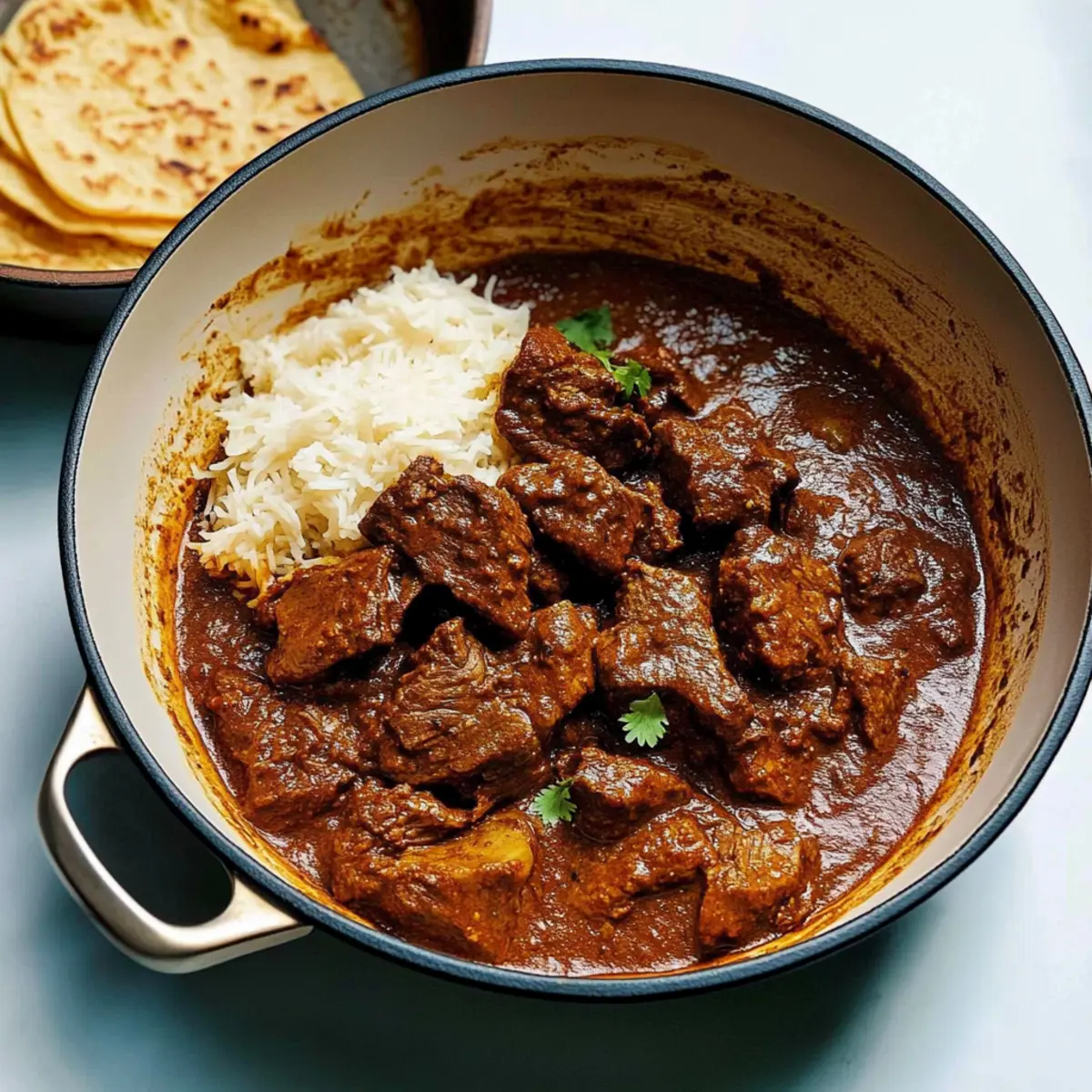
Why Is This Coconut Curry A Must-Try?
Bursting with Flavor: This coconut beef curry combines an array of aromatic spices that bloom during cooking, creating a rich and complex flavor profile that is sure to impress.
Effortlessly Impressive: Perfect for both home cooks and seasoned chefs alike, this dish transforms simple ingredients into an unforgettable meal, showcasing your culinary skills without extensive prep time.
Versatile Delight: Enjoy it with basmati rice, warm naan, or even as a filling on its own; you can customize serving options based on your mood or pantry.
Time-Saving Benefits: With just one pot needed for cooking and a simmering time that fills your kitchen with intoxicating aromas, this curry makes meal prep a breeze, letting you focus on enjoying time with loved ones.
Crowd-Pleasing Comfort: Whether it’s a casual family dinner or an elegant gathering, this dish will charm your guests and spark joy among all food lovers. Consider trying it with a side of warm naan for that extra delightful experience!
Coconut Beef Curry Ingredients
For the Masala Paste
- Black Peppercorns – Adds heat and warmth; substitute with white pepper for a milder flavor.
- Coriander Seeds – Provides a citrusy, nutty flavor; ground coriander can be used in a pinch.
- Cumin Seeds – Contributes earthy notes; use ground cumin if seeds are unavailable.
- Fennel Seeds – Adds sweetness to balance the spices; omit if not available, but may alter flavor depth.
- Poppyseeds – Thickens the curry; use ground almonds for a similar texture if allergies are a concern.
- Green Cardamom Pods – Imparts aromatic sweetness; substitute with ground cardamom if necessary.
- Cloves – Introduces a warm, aromatic flavor; omit for a less intense profile if desired.
- Star Anise – Offers a sweet, licorice note; replace with a dash of anise extract in a pinch.
- Dried Red Chiles – Adds heat and color; adjust quantity based on spice tolerance.
- Curry Leaves – Essential for authentic flavor; try bay leaves as a substitute if unavailable.
For the Curry
- Unsweetened Grated Coconut – Adds rich texture and sweetness; shredded coconut can be used as a replacement.
- Sesame or Canola Oil – Used for cooking; can substitute with any neutral oil.
- Black Mustard Seeds – Adds a sharp flavor and crunch; omit if unavailable but consider using cumin seeds instead.
- Ginger Paste – Provides a fresh, spicy flavor; substitute with fresh grated ginger or powdered, adjusting the quantity.
- Garlic Paste – Enhances flavor depth; use fresh garlic or garlic powder as an alternative.
- Red Onion – Adds sweetness and depth to the curry; yellow or sweet onion can also work as substitutes.
- Fine Sea Salt – Essential for flavor enhancement; regular salt can be used if needed.
- Ground Coriander – Reinforces coriander flavor; fresh coriander leaves can be used as a garnish instead.
- Ground Cumin – Reinforces cumin flavor; same as above, fresh cumin leaves can be used for garnish.
- Kashmiri Red Chile Powder – Adds color and flavor; substitute with paprika for lower heat.
- Ground Turmeric – Imparts vibrant color and earthiness; fresh turmeric can be used in place of ground if available.
- Bird’s-Eye Chiles – Adds heat; adjust according to spice preference.
- Plum Tomatoes – Contributes acidity and sweetness; canned tomatoes can be a practical substitute.
- Boneless Beef Chuck – Provides hearty texture; use chuck roast or short ribs; opt for chicken or chickpeas for a lighter version.
- Medium Potato (optional) – Adds heartiness to the dish; omit or substitute with sweet potato for variation.
- Unsweetened Coconut Milk – Provides creaminess and richness; replace with heavy cream or cashew cream for a non-coconut version.
Serving Suggestions
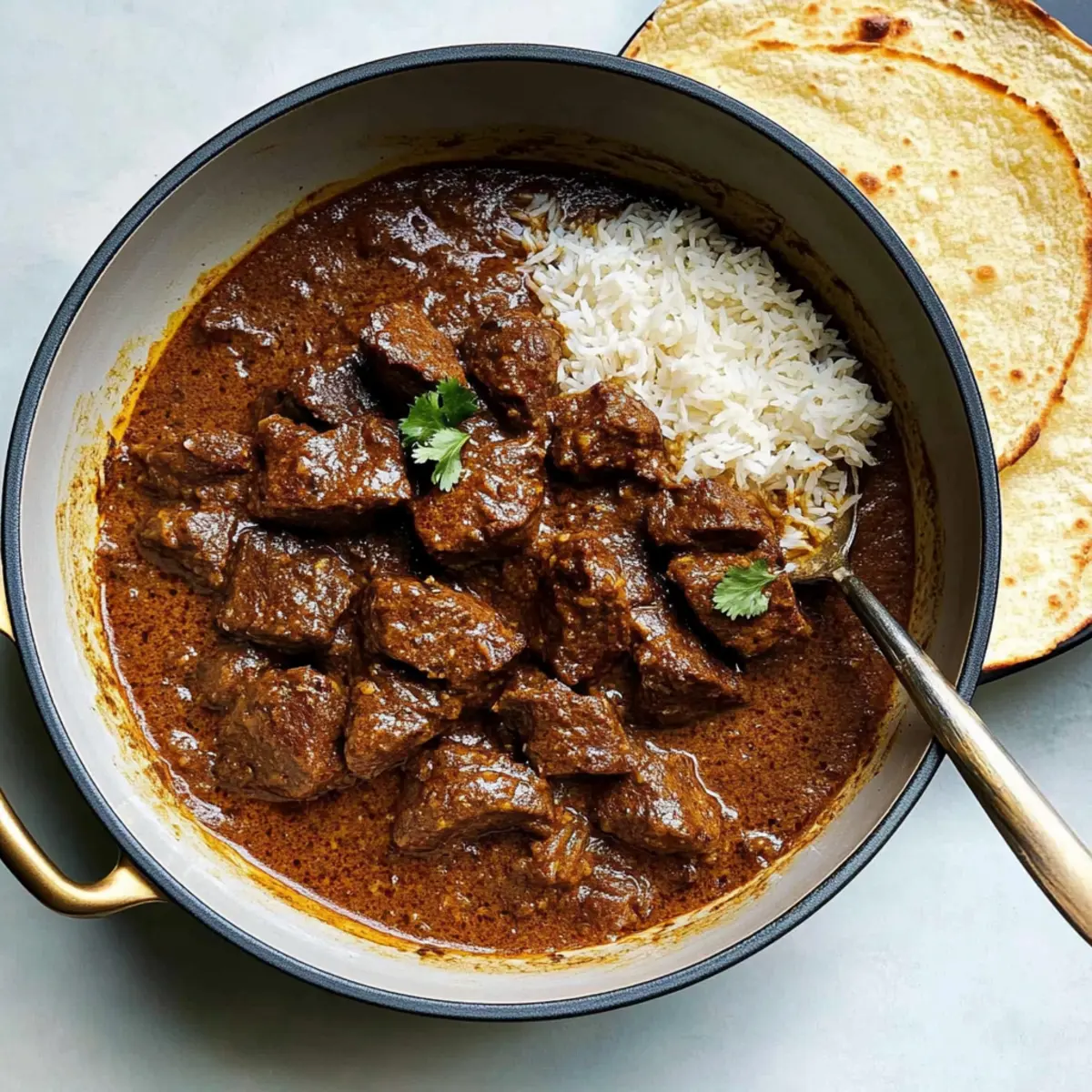
- Consider serving with paratha, basmati rice, or roti – all excellent for soaking up the rich sauce of your coconut beef curry!
Step‑by‑Step Instructions for Velvety Coconut Beef Curry
Step 1: Make the Masala Paste
Begin by toasting the black peppercorns, coriander seeds, cumin seeds, fennel seeds, and poppy seeds in a dry skillet over medium heat. Stir constantly for about 3-4 minutes until fragrant. Transfer these browned spices to a blender, add the unsweetened grated coconut and a splash of water, then blend until you achieve a smooth, rich masala paste.
Step 2: Cook the Aromatics
In a Dutch oven, heat two tablespoons of sesame or canola oil over medium heat. Once the oil is shimmering, add the black mustard seeds and sauté until they start to pop. Then, add the ginger and garlic paste, along with the chopped red onion and fine sea salt. Cook this mixture for about 5-7 minutes, stirring occasionally, until the onions are softened and translucent.
Step 3: Spice Up the Base
Stir in the ground coriander, ground cumin, Kashmiri red chile powder, and ground turmeric along with the fresh bird’s-eye chiles into the pot. Cook for another 2-3 minutes until the spices release their fragrant aroma, continuously stirring to prevent any sticking. This step builds a flavorful foundation for your coconut beef curry.
Step 4: Tomato Integration
Add the chopped plum tomatoes to the pot, stirring to incorporate everything well. Let this mixture simmer for about 10 minutes, stirring occasionally, until the tomatoes break down and the oil starts to separate from the sauce. You’re aiming for a slightly thickened base to amplify those delicious flavors.
Step 5: Combine Masala and Meat
Pour in the prepared masala paste, followed by the boneless beef chuck, and add enough water to cover the meat. Bring the mixture to a gentle simmer, cover, and let it cook for 40-50 minutes on low heat, stirring occasionally, until the beef is tender and easily pulled apart with forks.
Step 6: Add Coconut Milk
Stir in half of the unsweetened coconut milk after the beef is tender. If you’re using cubed medium potatoes, add them now, then cover and simmer for an additional 15-20 minutes until the potatoes are cooked through. The consistency should be creamy and velvety, characteristic of a good coconut beef curry.
Step 7: Final Touches
Add the remaining coconut milk to the pot, stirring well to combine. Allow the curry to simmer for a few more minutes, then taste and adjust the seasoning if needed, adding more salt or spices according to your preference. This finishing touch ensures a perfectly balanced flavor before serving.
Make Ahead Options
These delightful Coconut Beef Curry meals are a savior for busy home cooks looking to save time! You can prepare the masala paste (steps 1 and 2) up to 24 hours in advance; simply refrigerate it in an airtight container to maintain freshness. Additionally, you may cut the beef and chop the vegetables, storing them separately for up to 3 days in the fridge. When you’re ready to create your curry, combine the prepped ingredients and follow steps 3 through 7. This method not only cuts down on cooking time but ensures your dish is just as fragrant and flavorful as if made fresh, with minimal effort!
How to Store and Freeze Coconut Beef Curry
Fridge: Store leftover coconut beef curry in an airtight container for up to 3 days. Make sure to let it cool to room temperature before sealing to prevent condensation.
Freezer: For long-term storage, freeze the curry in a suitable container for up to 3 months. Portion it out for easier reheating later.
Reheating: When ready to enjoy, thaw overnight in the fridge if frozen. Reheat on the stovetop over low heat, adding a splash of water if it thickens, stirring gently until warm.
Airtight Storage: Always ensure your containers are airtight to maintain the flavor and quality of your coconut beef curry, preventing freezer burn or spoilage.
Expert Tips for Coconut Beef Curry
-
Toast Wisely: Ensure the spices are toasted just right. Over-toasting can lead to bitterness. Keep them on medium heat and stir constantly to unlock their flavors.
-
Simmer for Depth: Patience is vital. Allow your coconut beef curry to simmer long enough for the flavors to meld beautifully. A longer simmer results in richer depth.
-
Adjust Heat Levels: Spice tolerance varies widely! Start with fewer bird’s-eye chiles and taste your curry as it cooks. You can always add more for that spicy kick!
-
Water Control: When combining the masala and meat, add water gradually. This way, you can achieve your preferred curry thickness without it getting too runny.
-
Let It Rest: After cooking, let the curry sit for a few minutes before serving. This resting time helps the flavors integrate even more, making each bite truly delightful!
-
Customize: Feel free to experiment! Use different proteins or add veggies like bell peppers, making this coconut curry versatile for various tastes and dietary needs.
What to Serve with Velvety Coconut Beef Curry
Elevate your dining experience with delightful accompaniments that embrace the rich flavors of this aromatic dish.
-
Fluffy Basmati Rice: Perfectly fluffy and aromatic, basmati rice absorbs the curry’s sauce beautifully, offering a satisfying contrast to the dish’s bold flavors.
-
Warm Naan Bread: This soft and pillowy bread is ideal for scooping up the coconut beef curry, adding a touch of comfort and warmth to your meal.
-
Cucumber Raita: Cool and refreshing, cucumber raita balances the spices in the curry and adds a creamy texture, making every bite harmonious and vibrant.
-
Spicy Lentil Salad: The nutty flavor and texture of lentils, combined with a spicy dressing, will add a nutritional punch and contrasting texture to your meal.
-
Indian Pickles: A small serving of tangy mango or lemon pickle brings an exciting zing that enhances the richness of the curry, creating a delightful flavor dance.
-
Chaas (Buttermilk Drink): This cooling yogurt-based drink is the perfect way to refresh your palate, especially after enjoying the spicy coconut beef curry.
Variations & Substitutions for Coconut Beef Curry
Customize this delightful coconut beef curry to suit your palate or dietary preferences, turning an already comforting dish into something uniquely yours!
-
Vegetarian Delight: Substitute beef with chickpeas or tofu for a hearty vegetarian version. Both options soak up flavors beautifully and keep the dish satisfying.
-
Add Extra Veggies: Toss in bell peppers, zucchini, or spinach to enhance your curry with vibrant colors and nutrition. These fresh additions make every bite a lovely surprise.
-
Chicken Twist: Use boneless chicken thighs instead of beef for a lighter take. Chicken cooks faster, making this variation perfect for weeknight dinners.
-
Heat Level Adjustments: Experiment with spices! For a milder curry, reduce the number of dried red chiles. If you love the heat, toss in some extra bird’s-eye chiles.
-
Coconut-Free Creaminess: For a non-coconut option, replace coconut milk with heavy cream or cashew cream. This twist delivers a different yet deliciously rich texture without the coconut flavor.
-
Thickening Alternatives: If you prefer a thicker curry, blend in mashed potatoes or pureed cauliflower. They add creaminess while being nutritious – a lovely surprise!
-
Different Spice Profiles: Switch up spices for unique flavors—try adding curry powder for an entirely new spice mix or garam masala for a warm, fragrant touch.
-
Quick Tomato Swap: If fresh tomatoes are out of season, canned tomatoes make an excellent alternative and provide consistent sweetness. Just drain them before adding to the pot.
Feel free to explore these fun ideas and transform your coconut beef curry into a meal that sings with your personal flair. And if you’re also considering a delightful side, don’t miss the chance to serve it with light and fluffy basmati rice or warm naan to perfectly soak up all those rich flavors!
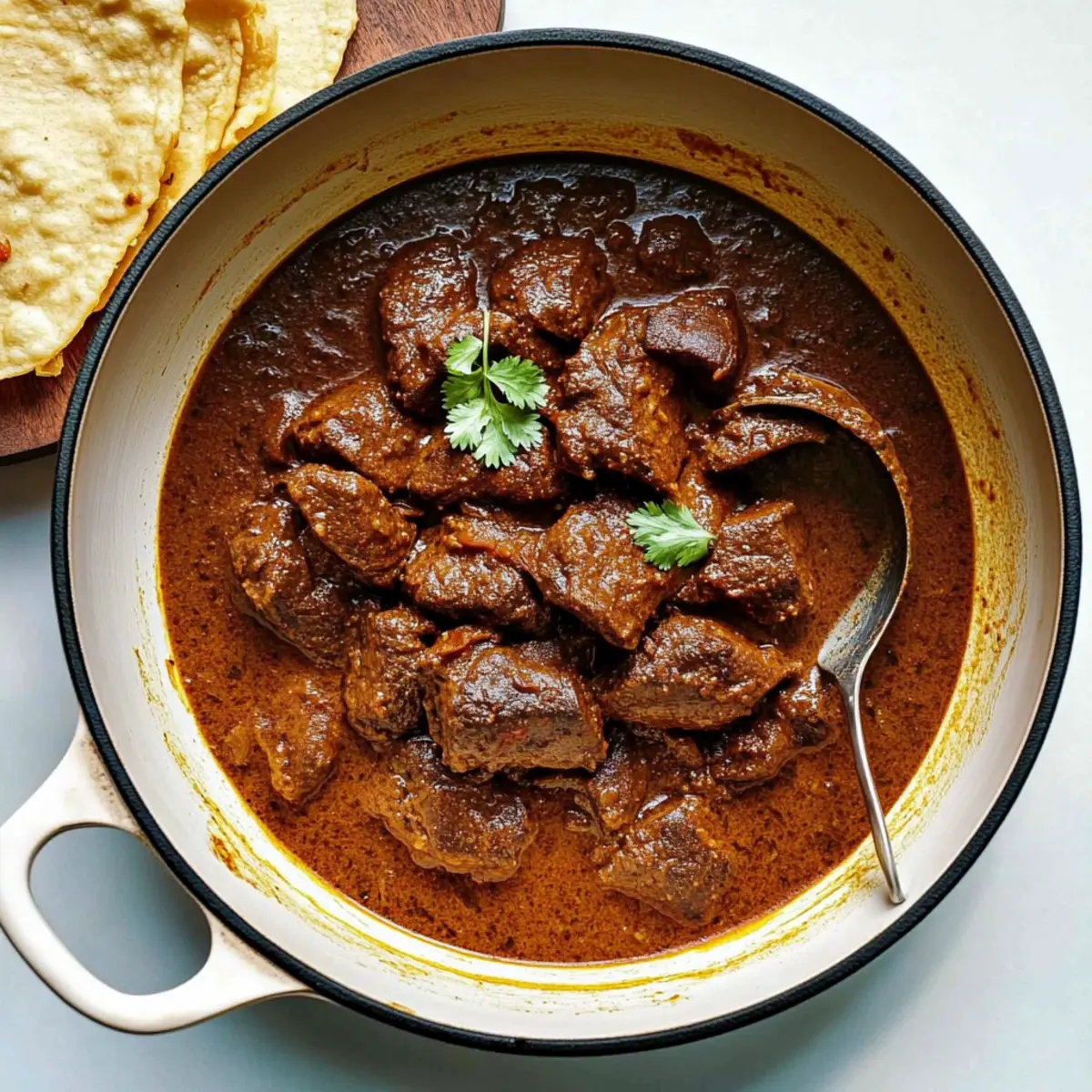
Coconut Beef Curry Recipe FAQs
What kind of beef should I use for coconut beef curry?
I recommend using boneless beef chuck, as it provides a hearty texture that becomes tender during cooking. Chuck roast or short ribs are also excellent options. If you’re looking for a lighter variation, consider substituting with chicken or chickpeas!
How can I tell if my spices are fresh enough for this recipe?
Always check for potency! Fresh spices should have a strong aroma; if they smell dull or have lost their fragrance, it’s time to replace them. Toasting whole spices before use can help enhance their flavors, so make sure to do this step for the best results!
What’s the best way to store any leftover coconut beef curry?
Store leftover coconut beef curry in an airtight container in the fridge for up to 3 days. Before sealing the container, let it cool to room temperature to avoid condensation. If you want to keep it longer, freeze it for up to 3 months, and be sure to portion it out for easier reheating later!
Can I freeze coconut beef curry? If so, how?
Absolutely! To freeze coconut beef curry, first let it cool completely. Then, pour the curry into airtight freezer-safe containers, leaving some space at the top for expansion. Label with the date, and it will last up to 3 months. When you’re ready to enjoy, simply thaw overnight in the fridge and reheat on the stovetop with a splash of water if it thickens too much.
Are there any dietary considerations for this recipe?
Yes, if you’re cooking for someone with nut allergies, be cautious with the use of poppyseeds; consider substituting with ground almonds if needed. The dish is naturally gluten-free; however, always double-check your spice labels to ensure they haven’t been processed with gluten-containing products.

Irresistible Coconut Beef Curry Bursting with Flavor
Ingredients
Equipment
Method
- Begin by toasting the black peppercorns, coriander seeds, cumin seeds, fennel seeds, and poppy seeds in a dry skillet over medium heat for about 3-4 minutes until fragrant. Transfer these browned spices to a blender, add the unsweetened grated coconut and a splash of water, then blend until you achieve a smooth, rich masala paste.
- In a Dutch oven, heat two tablespoons of sesame or canola oil over medium heat. Once the oil is shimmering, add the black mustard seeds and sauté until they start to pop. Then, add the ginger and garlic paste, along with the chopped red onion and fine sea salt. Cook for about 5-7 minutes, stirring occasionally, until the onions are softened and translucent.
- Stir in the ground coriander, ground cumin, Kashmiri red chile powder, and ground turmeric along with the fresh bird's-eye chiles into the pot. Cook for another 2-3 minutes until the spices release their fragrant aroma, continuously stirring.
- Add the chopped plum tomatoes to the pot, stirring to incorporate everything well. Let this mixture simmer for about 10 minutes, until the tomatoes break down and the oil starts to separate from the sauce.
- Pour in the prepared masala paste, followed by the boneless beef chuck, and add enough water to cover the meat. Bring to a gentle simmer, cover, and let it cook for 40-50 minutes on low heat, stirring occasionally.
- Stir in half of the unsweetened coconut milk after the beef is tender. If using cubed medium potatoes, add them now, then cover and simmer for an additional 15-20 minutes until the potatoes are cooked through.
- Add the remaining coconut milk to the pot, stirring well to combine. Allow the curry to simmer for a few more minutes, then taste and adjust the seasoning as needed.